1.85 / 2.39DCI Digital Cinema
Standard Digital
Most screenings worldwide use DCI-compliant 2K or 4K digital projection from a Digital Cinema Package.
 REC 00:00:24:07
Reel 01 · The Director's Archive
An independent field guide to IMAX and 70mm screens, golden-age movie palaces, open-air picture gardens and the streets, farms and fortresses where unforgettable films were made.
Reel 02 · Featured Frames
Eight landmark screens and screen locations, each with a full dossier: architecture, formats, history, accessibility and what to see nearby. Search above filters these frames instantly.

Reel 03 · Projection Booth
Aspect ratios are only part of the story. Here is how the major presentation formats differ on screen—explained without marketing hype.
Most screenings worldwide use DCI-compliant 2K or 4K digital projection from a Digital Cinema Package.
Selected venues can show the taller 1.43:1 frame; many IMAX screens present expanded scenes at 1.90:1.
Film runs horizontally, 15 perforations per frame—offered at only a small number of venues worldwide.
The classic roadshow format: a wide 65mm-originated image printed on 70mm stock with space for sound.
Reel 04 · Edit Timeline
Scroll the timeline to travel from Edwardian picture houses to permanent film sets.
The Electric opens on Portobello Road, among Britain's first purpose-built cinemas.
Sun Pictures begins screening films under the stars in Broome, Western Australia.
Timothy Pflueger's Castro Theatre opens in San Francisco.
Grauman's Chinese Theatre premieres The King of Kings on Hollywood Boulevard.
Le Grand Rex unveils its starlit atmospheric auditorium in Paris.
Dubrovnik's Old Town joins the UNESCO World Heritage List.
BFI IMAX opens in London; the Shire is filmed near Matamata.
The Chinese Theatre reopens with a vast IMAX auditorium.
Reel 05 · Director's Notebook
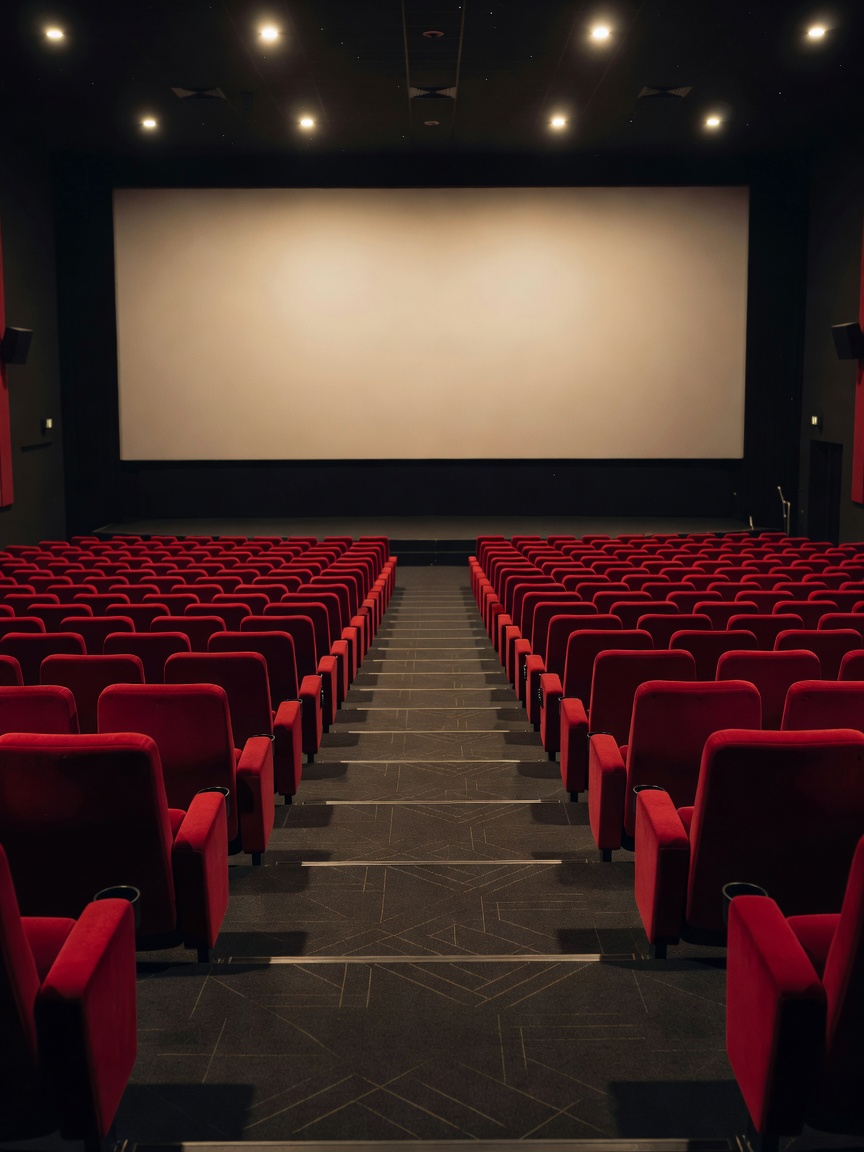
A great cinema is a machine for attention. Its rake, its screen geometry, the hush of the walls and the warmth of the light all decide how a film lands.
Reel 06 · Collections
Jump into themed collections by country, architecture, era, format or production.